


Choose natural thin stone veneer when you want real stone with less thickness and weight. Consider full-bed stone when the design calls for deeper masonry and the wall assembly can support it. The right choice depends on the construction details, desired appearance and total installed cost—not simply which material looks better in a sample.
For a Utah custom home, this decision belongs early in design. Stone depth affects the places where the facade meets windows, doors, columns and adjacent finishes. Sorting those transitions out before ordering can make the finished exterior look more considered and make pricing easier to compare.
What is the difference between natural stone veneer and full-bed stone?
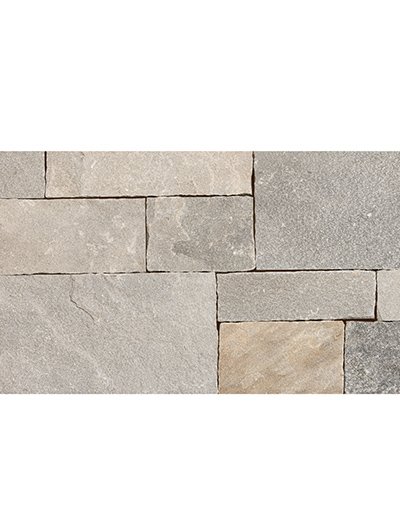
Natural thin stone veneer is quarried stone cut into a thinner facing material. “Veneer” describes its use as a facing; it does not mean the material is artificial. Manufactured stone veneer is a separate category.
Full-bed stone, also called full-thickness building stone, uses thicker units. When used as exterior veneer, it still should not be assumed to carry the building’s structural loads. Its support and attachment need to be designed for the wall assembly.
Thin stone products can reduce thickness and weight substantially, but dimensions vary by supplier and collection. Review the selected product’s data instead of treating one thickness as universal. Technical reference: natural thin stone veneer characteristics.
| Decision | Natural thin stone veneer | Full-bed stone |
|---|---|---|
| Material | Real quarried stone in a thinner format | Real quarried stone in thicker units |
| Wall planning | Requires an appropriate adhered assembly | Typically requires structural bearing support and designed attachment |
| Visual character | Depends on face texture, pattern, joints and corners | Allows greater physical depth where detailed to show it |
| Useful starting point | Renovations, feature areas and projects with limited wall depth | New construction planned around substantial masonry details |
| Cost comparison | Include preparation, corners, mortar and installation | Include support, handling, attachment and installation |
When does thin stone veneer make sense?
Start with thin veneer if you are adding stone to an existing facade or working around limited depth at openings. It is also worth considering when the design calls for selected stone areas rather than an extensive masonry exterior.
For example, an entry wall and chimney can establish a home’s material palette without requiring stone across every elevation. This is a design approach to explore, not a rule about how much stone a home should have.
Installation still matters. A lighter product does not mean it can be attached directly to any existing surface. Ask your installer to identify the approved substrate, preparation and mortar system, along with exterior moisture-management details. Manufacturers publish installation systems specifically for adhered masonry and natural stone veneer. Installation-system reference.
Explore Stone Era’s natural stone options with your elevations in hand so the format and the architecture can be considered together.
When is full-bed stone worth considering?
Full-bed stone is worth exploring when masonry depth is an intentional part of the architecture. Deep opening returns, substantial piers and exposed stone ends are details to discuss with your designer and mason.
Ask them to show where the thickness will actually be visible. If most of the stone is seen only from the front, texture, unit size and mortar joints may have more influence on the appearance than the depth hidden behind it.
For projects in Heber City and Midway, compare an entry or chimney detail at two scales: from the approach to the home and from a few feet away. The first view helps you judge the overall composition; the second reveals joints, corners and transitions.
Which option looks better on a custom home?
Both can create a convincing, well-proportioned exterior. The useful question is which format supports the details you want.
Before selecting, assemble a small palette with the actual roofing, window-frame color, siding and stone. Include a mortar sample if joints will be visible. Review the materials outdoors rather than relying on separate screen images.
For an Alpine custom-home exterior, start with one dominant material and let the others support it. A restrained palette can still have rich texture. Ask for a corner mockup when possible; it helps you evaluate how the stone turns, not just how its face looks.
Is thin stone veneer less expensive?
It can be, but compare complete installed scopes. Cutting stone into a thin format has a cost, and a veneer installation still needs preparation and skilled labor. Full-bed work has its own support and handling requirements.
Request quotes that identify the same stone coverage, corners, caps, opening details, freight and installation scope. A low square-foot material price is difficult to evaluate when those items are missing.
Tell the supplier whether your area measurement includes windows and doors, and ask the installer to confirm the final quantity and waste allowance before ordering.
Frequently asked questions
Is natural stone veneer real stone?
Yes. Natural thin stone veneer is cut from quarried stone. It is different from manufactured veneer, which is made to resemble stone.
Can thin veneer look like full-bed stone?
It can create a similar face appearance when the stone, pattern, joints and corner details are coordinated. Compare a physical mockup, particularly at exposed ends and openings.
Is thicker stone automatically better for Utah winters?
No. Thickness alone does not establish exterior suitability. Check the selected stone and installation system for the exposure and application.
What should I send for a material quote?
Send elevations, approximate coverage, corner requirements, the project location and inspiration images. Include the preferred format if your designer has already selected it.
Find the stone that fits your plans
Compare materials against your actual drawings
Stone Era can help you compare materials for the look and scope of your project.