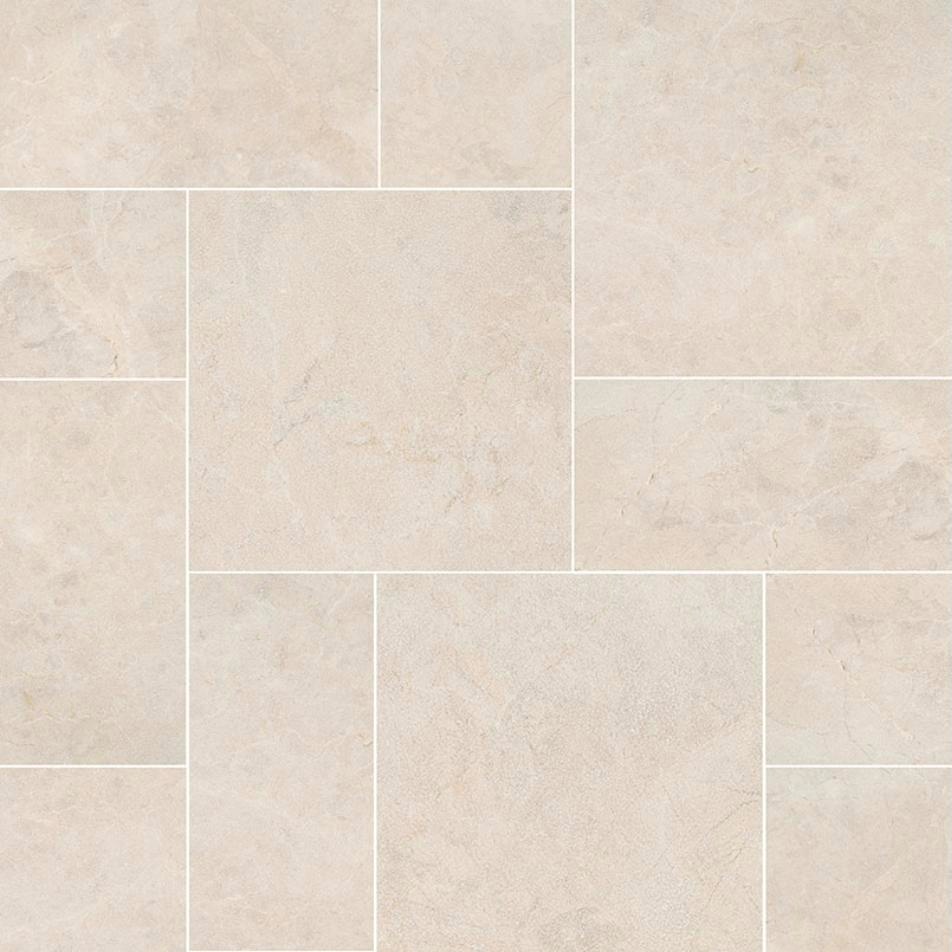
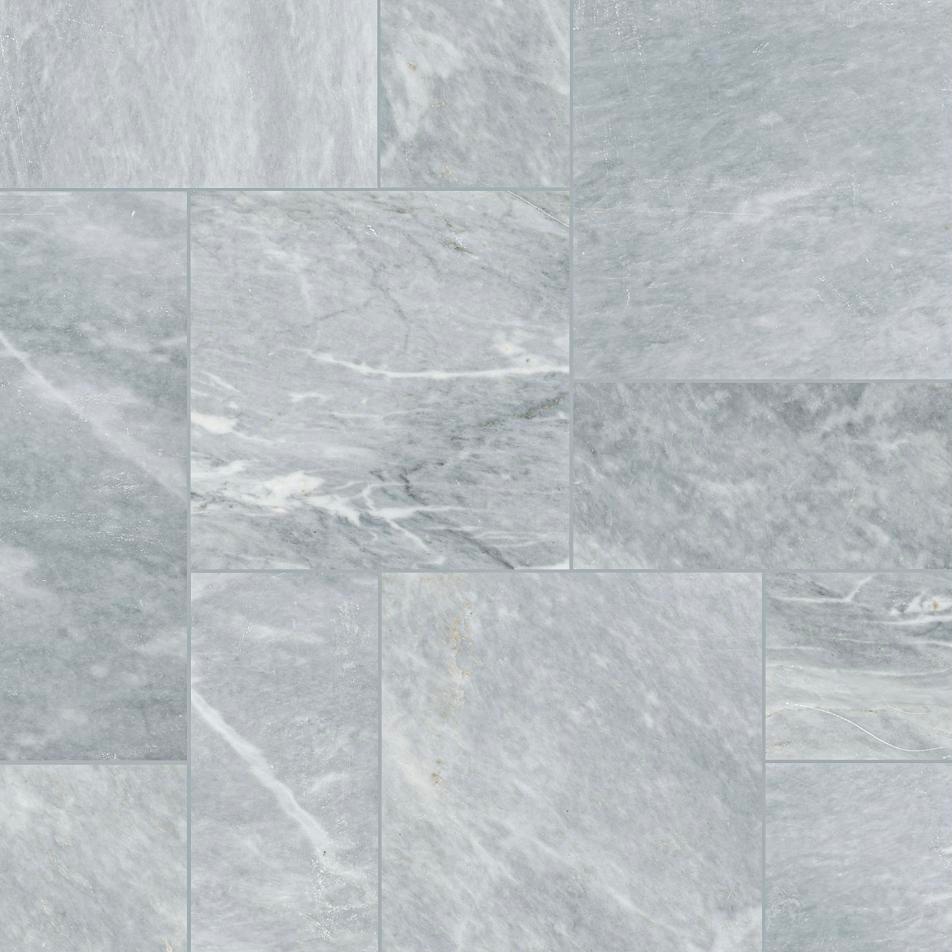
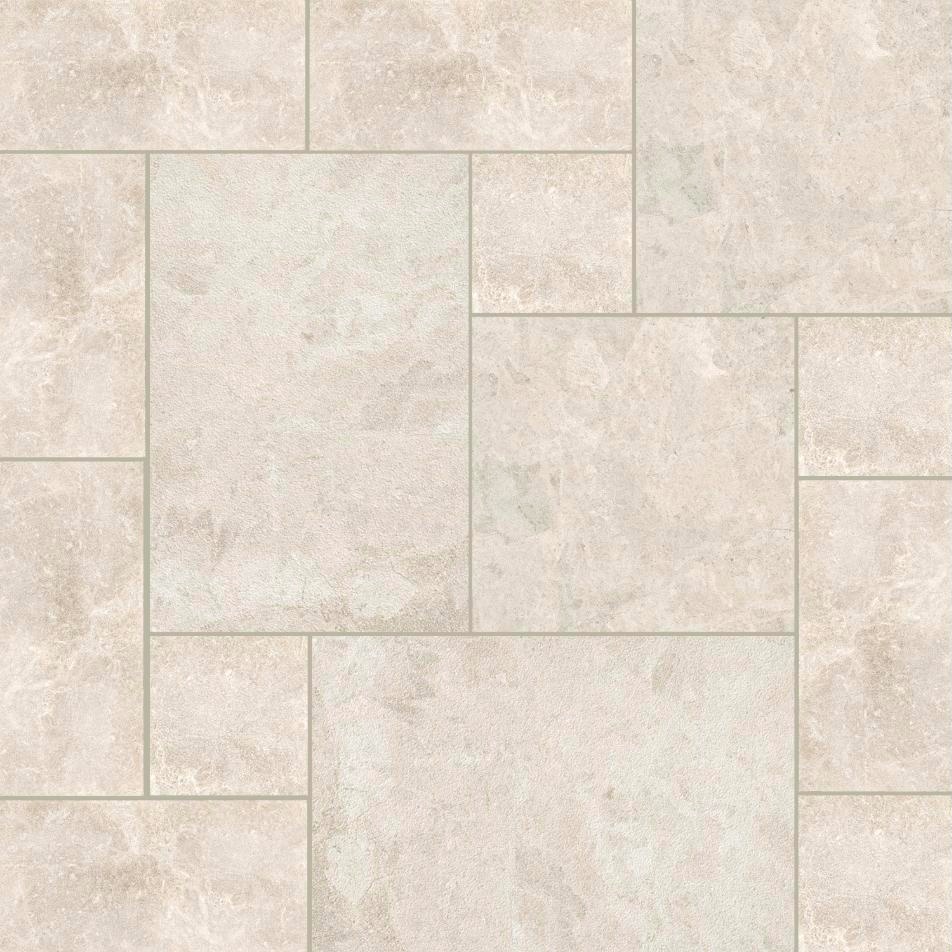
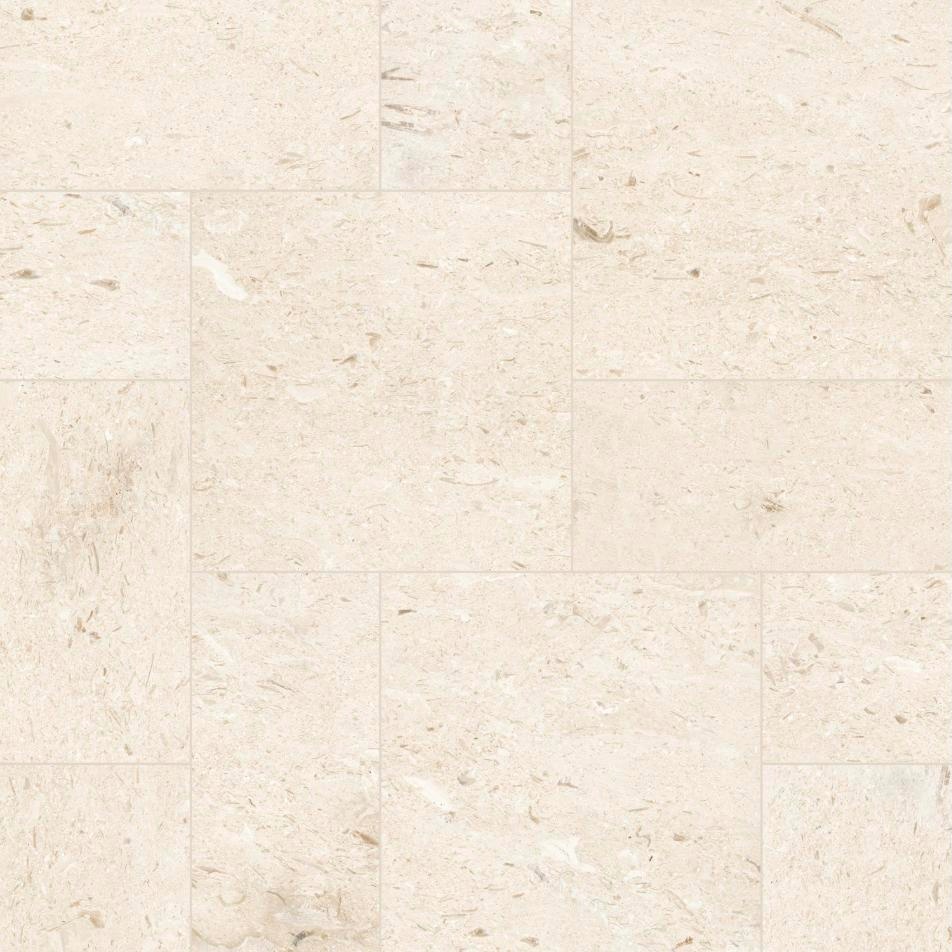
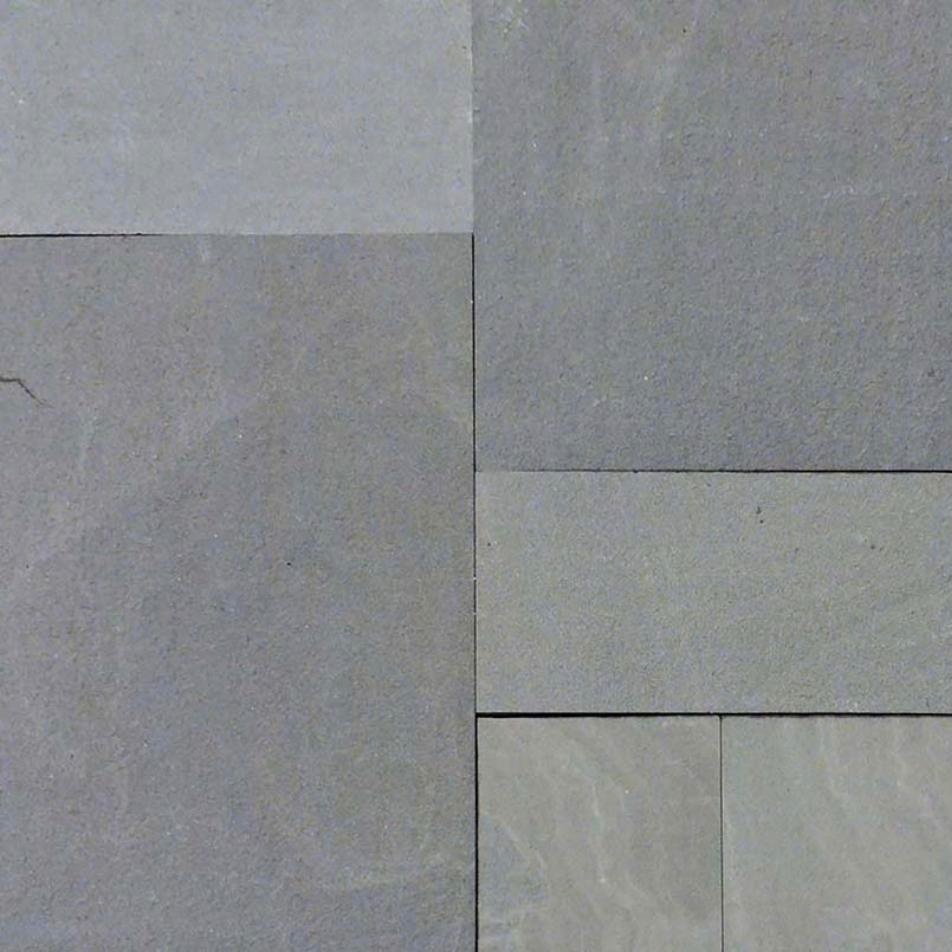
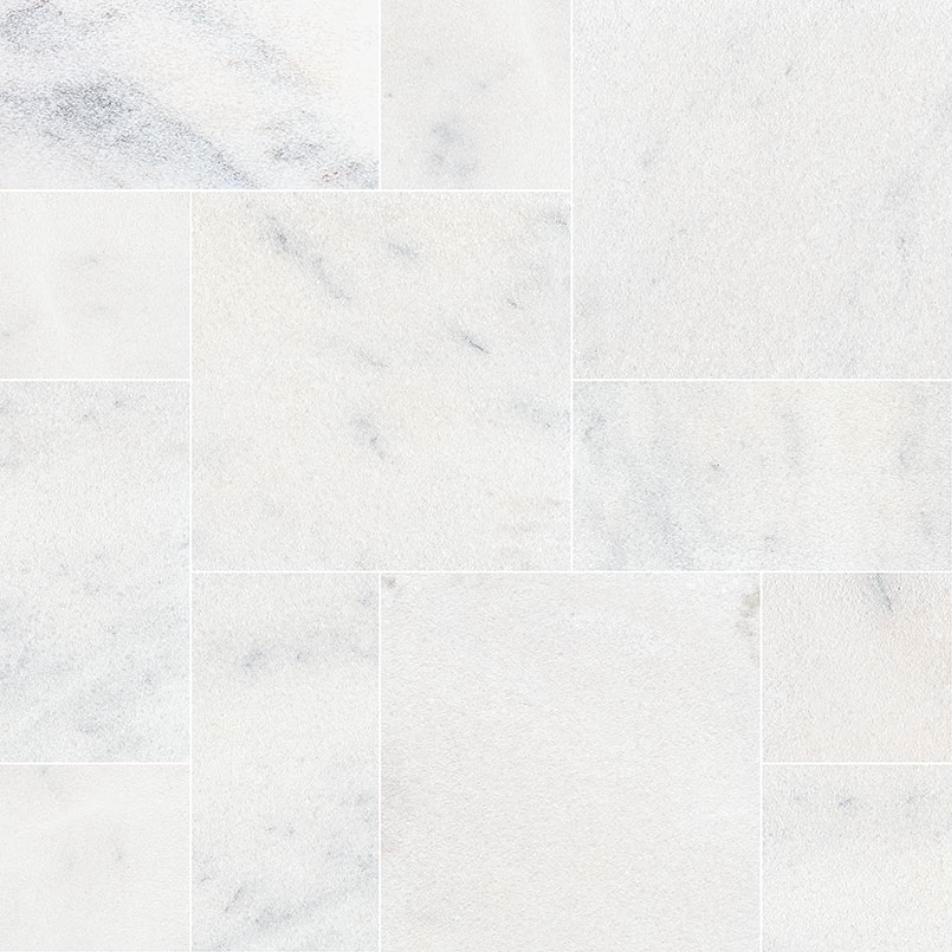
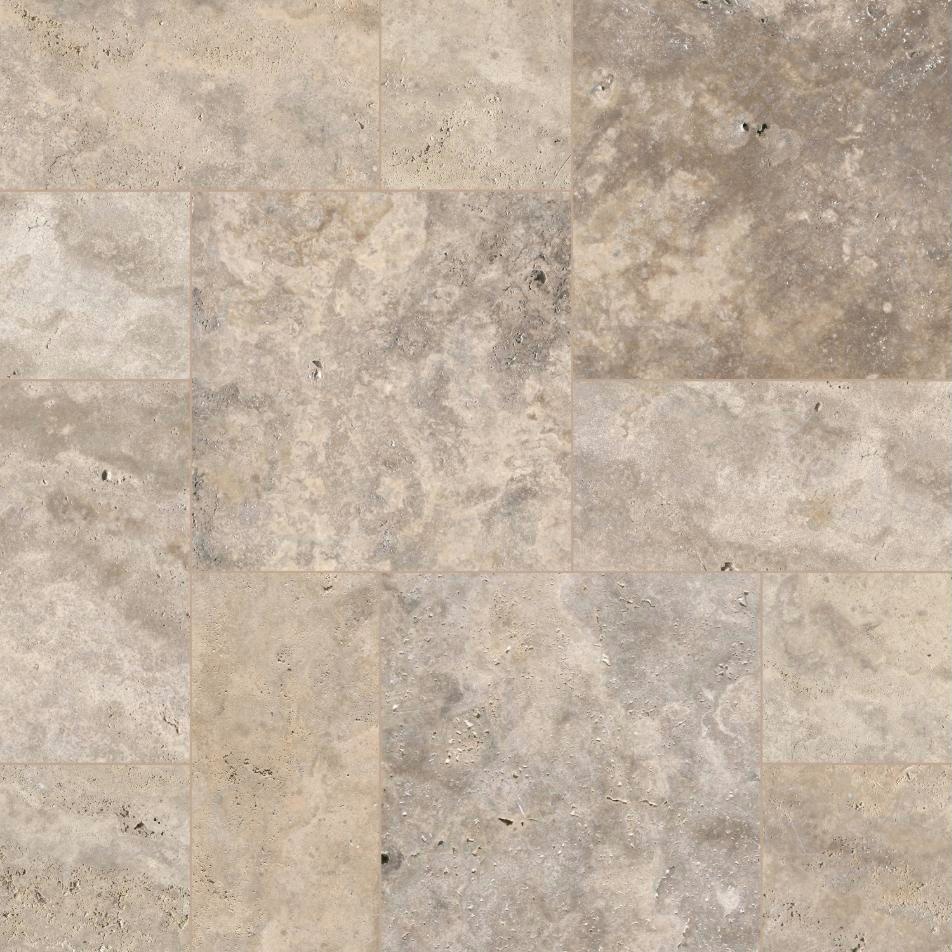
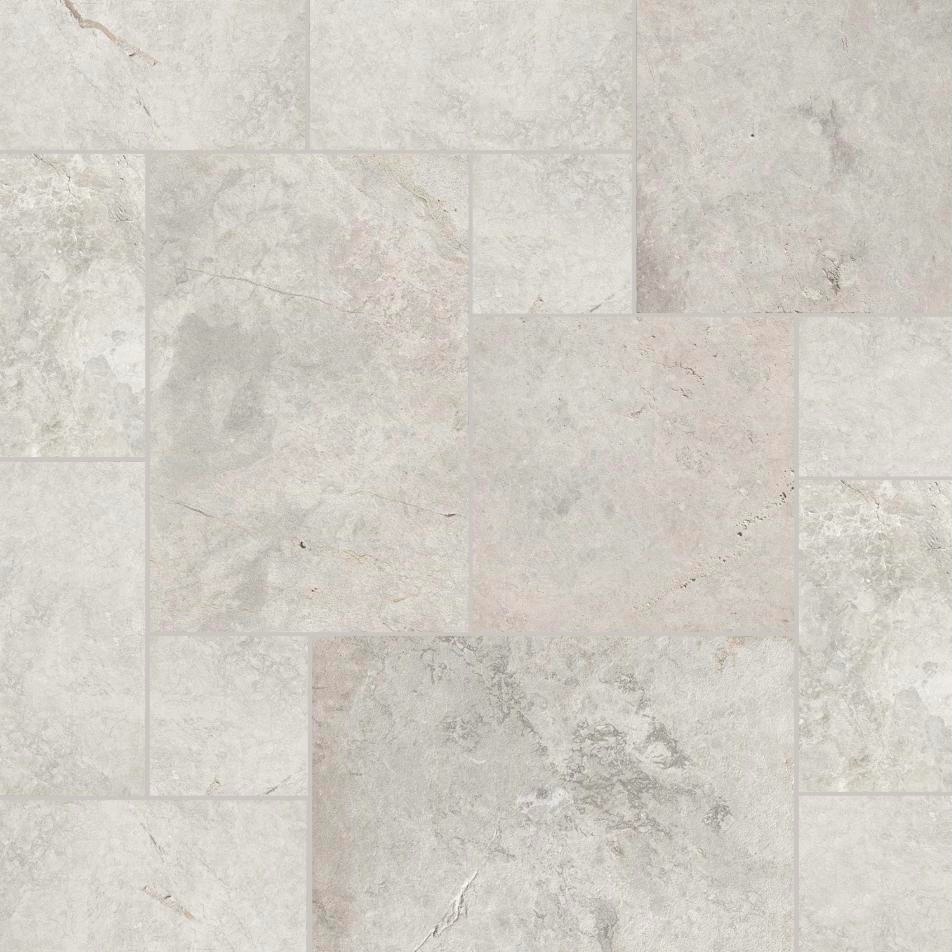
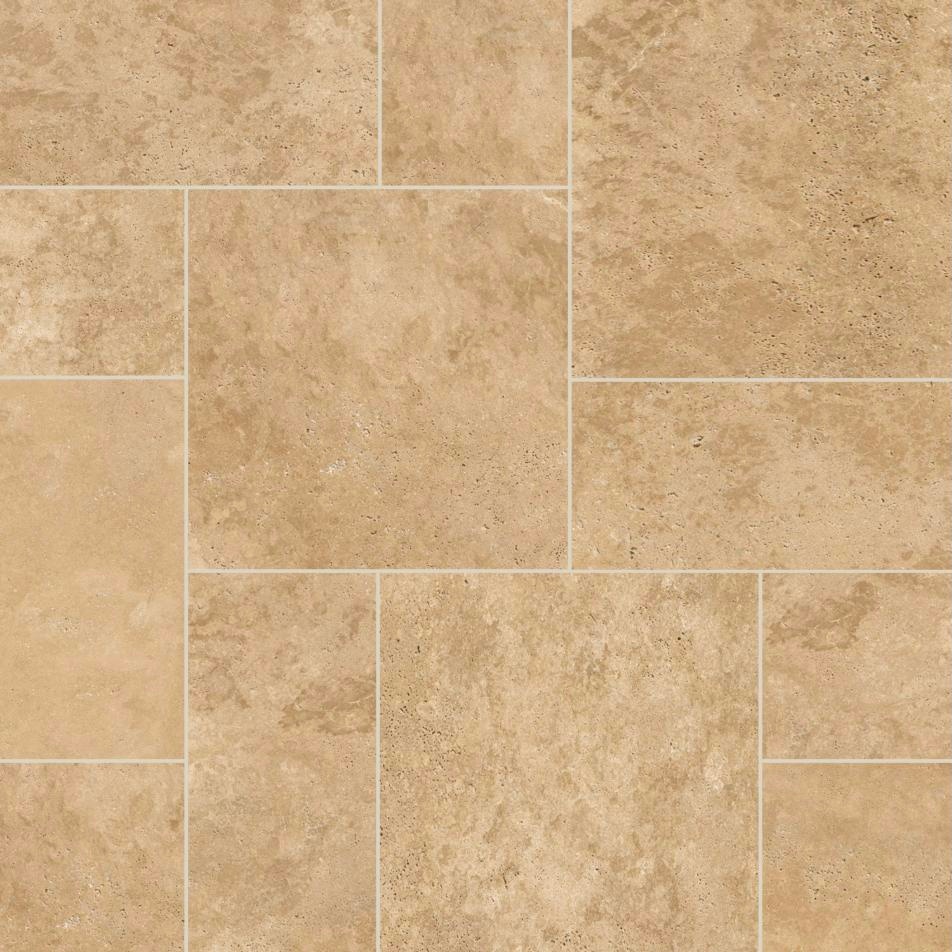
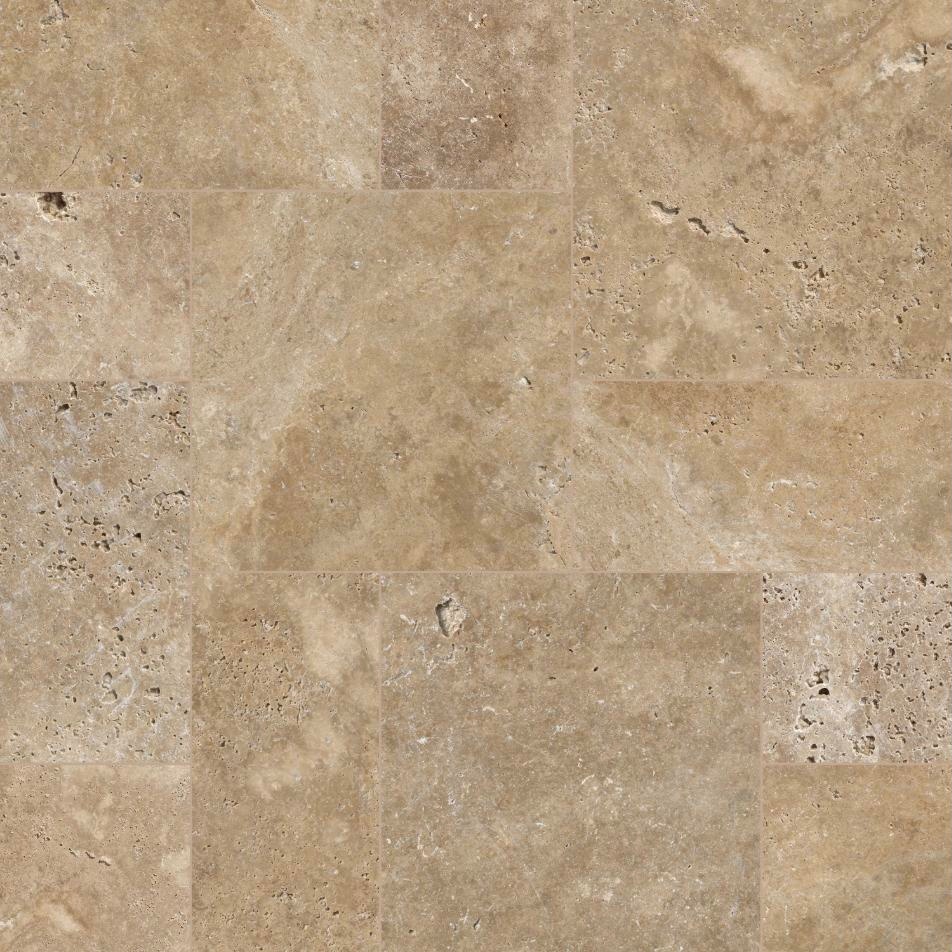
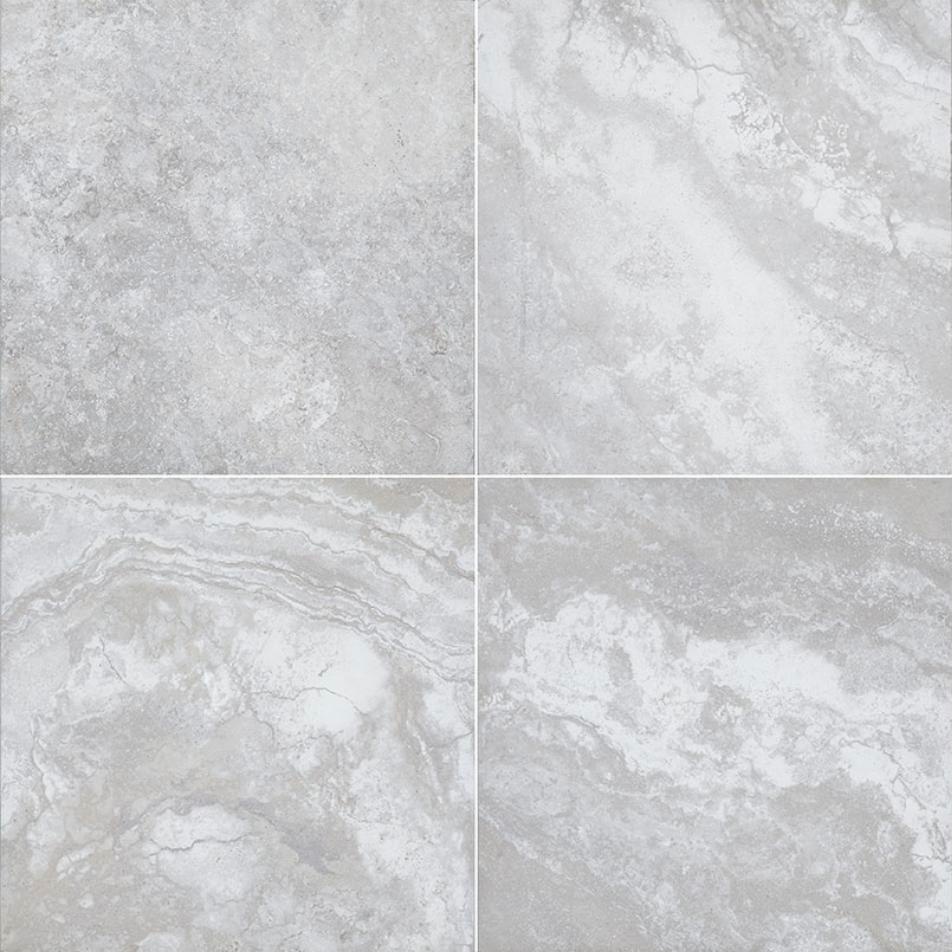
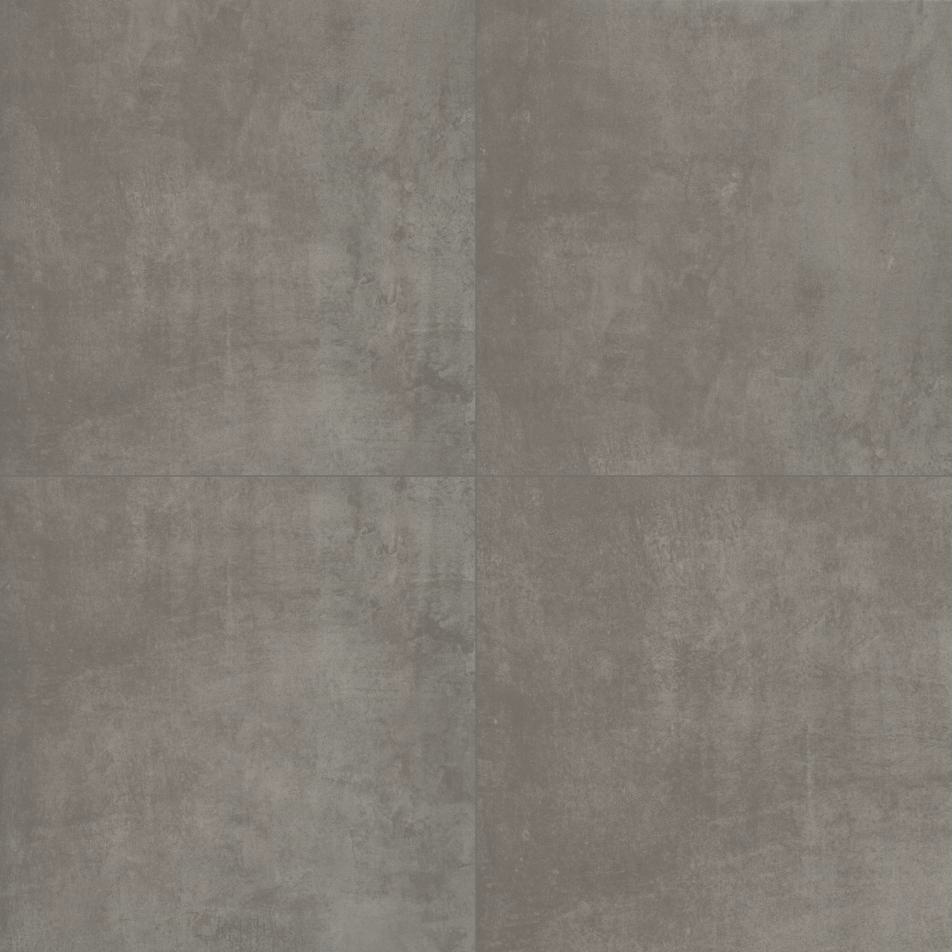
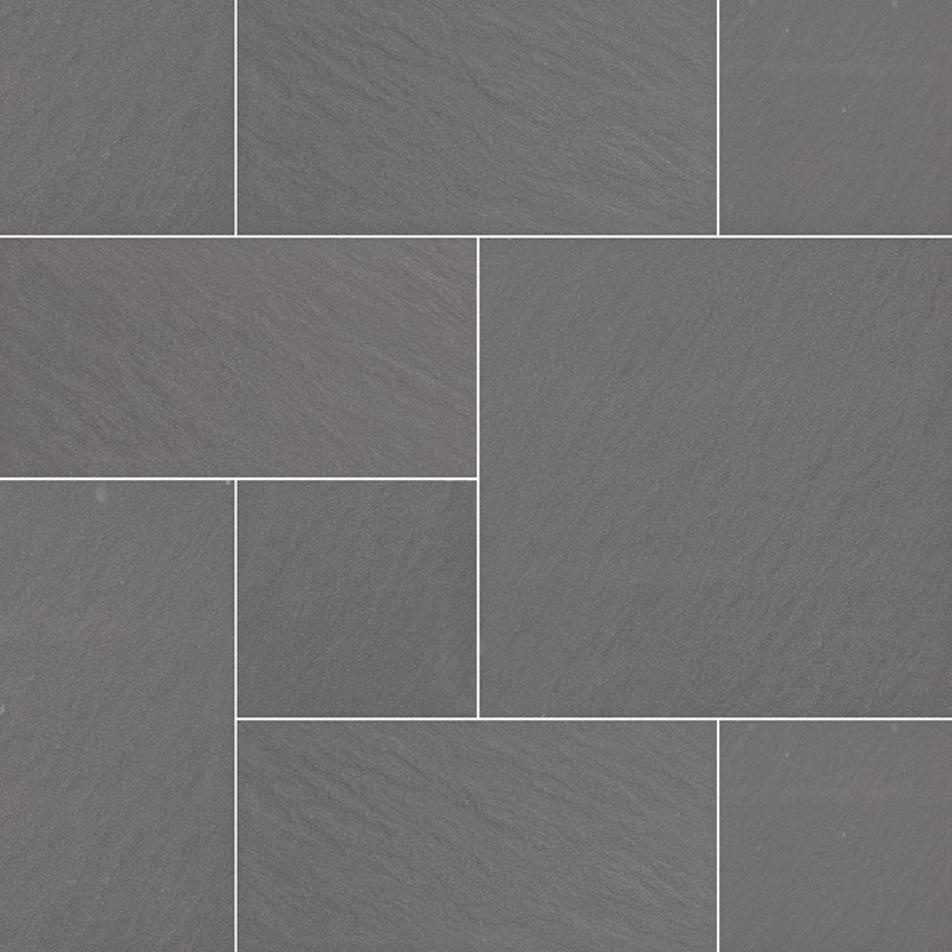
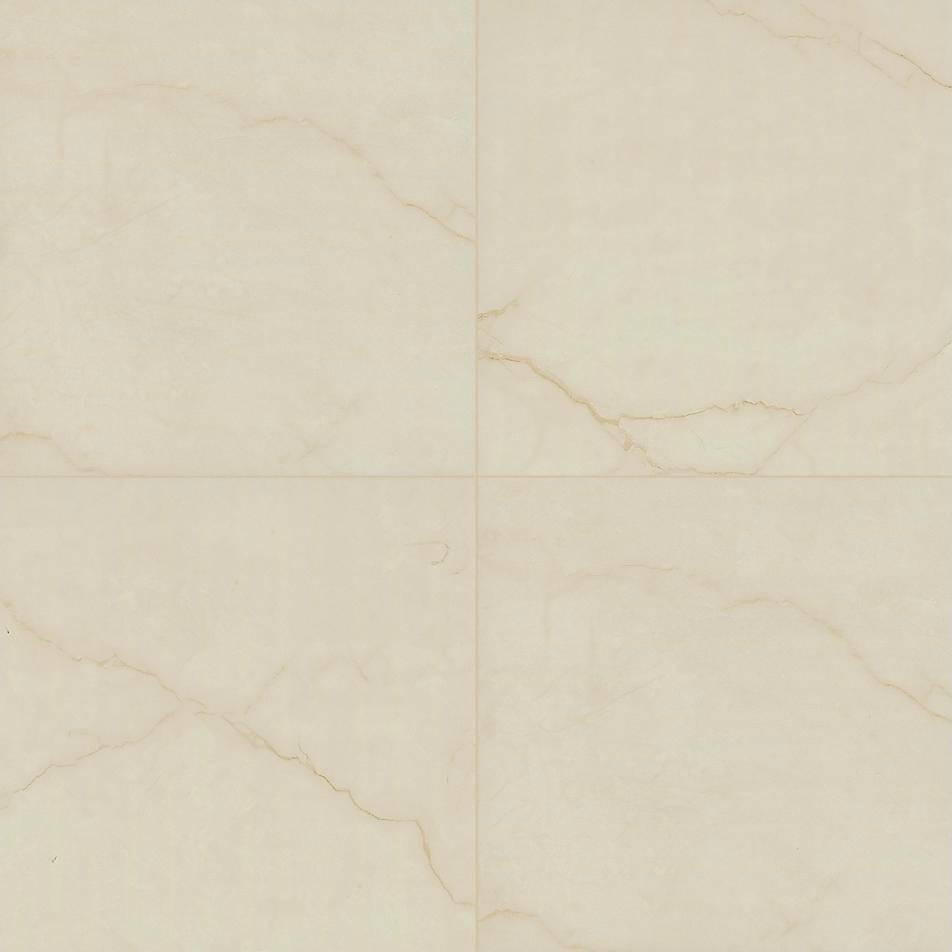
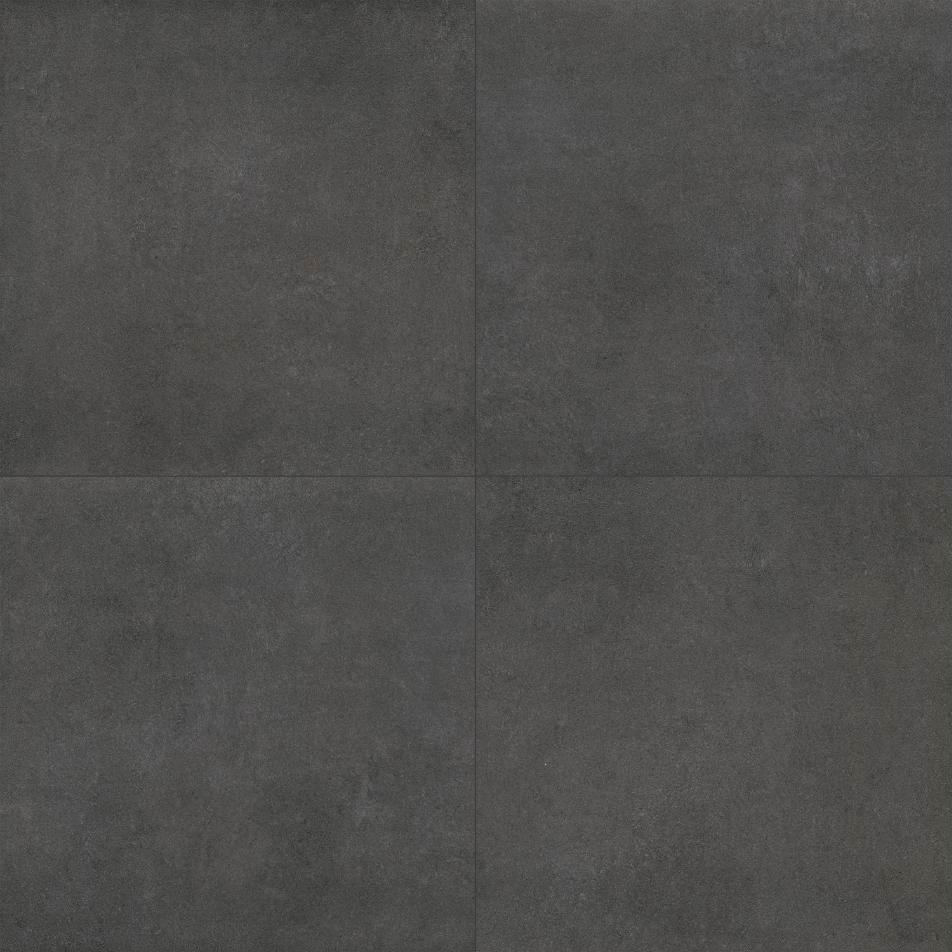
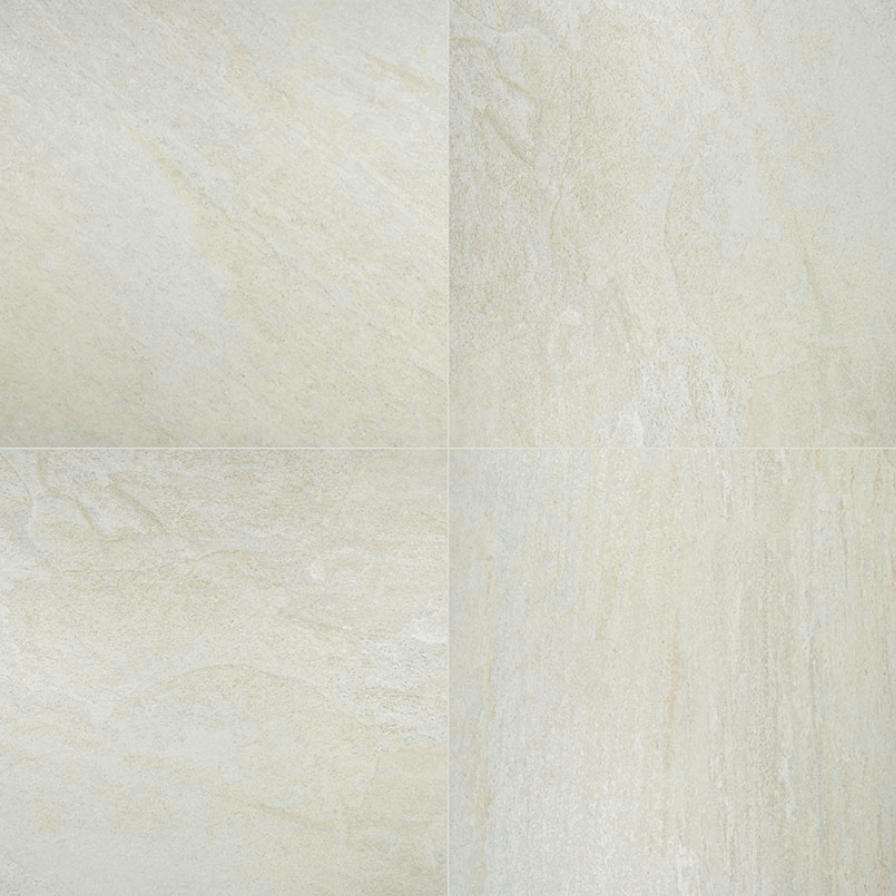
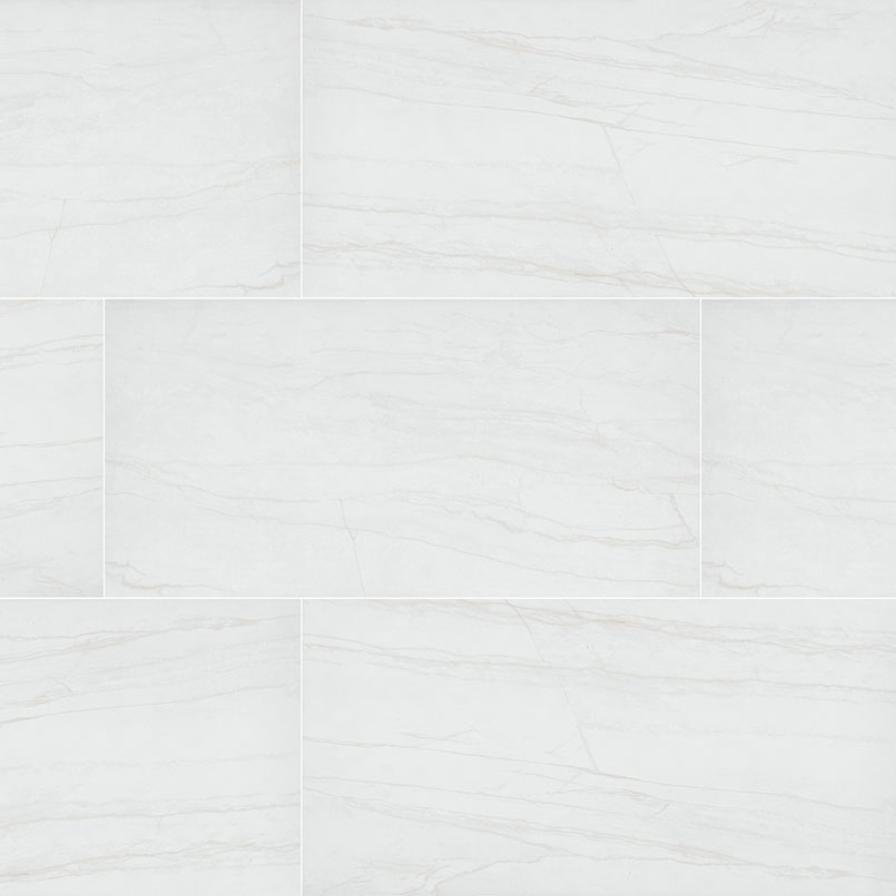
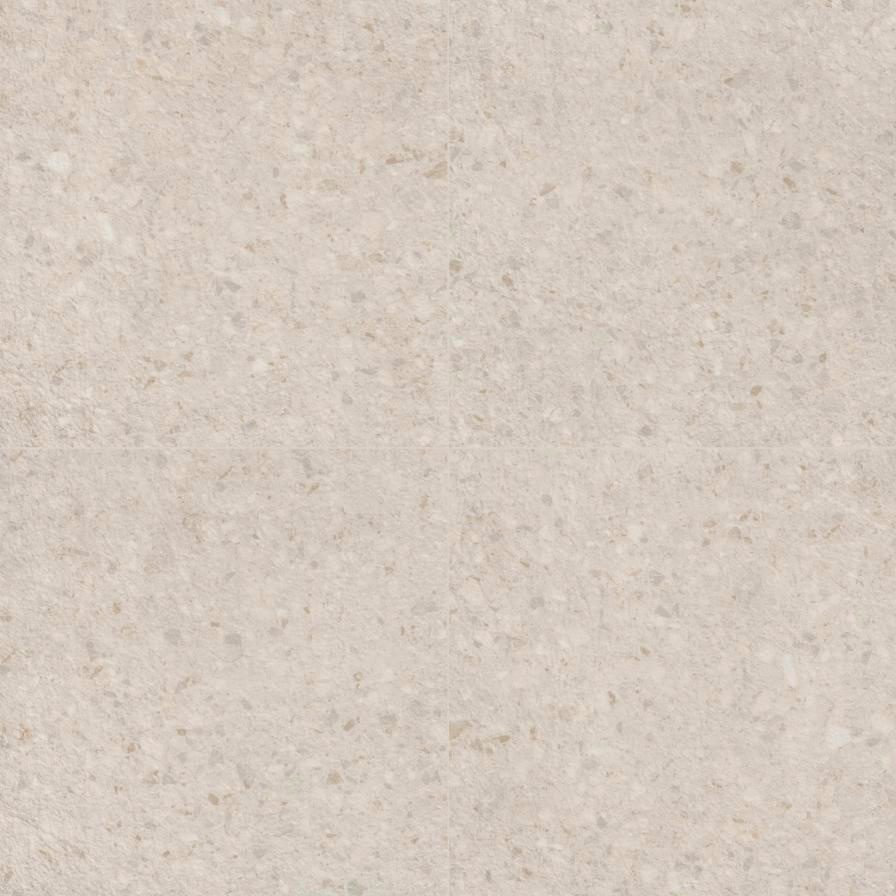
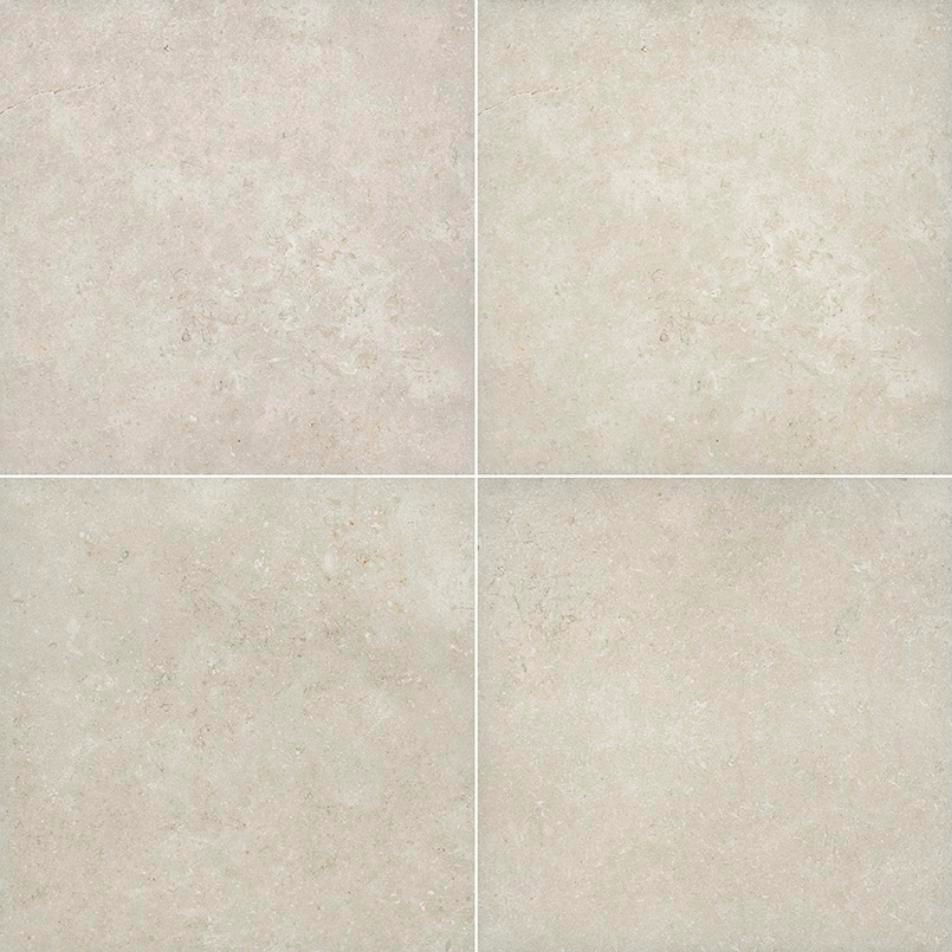
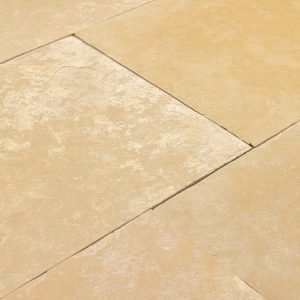
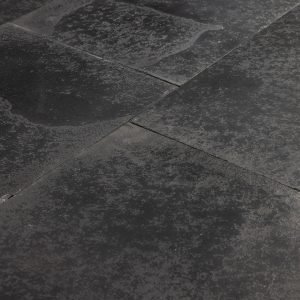
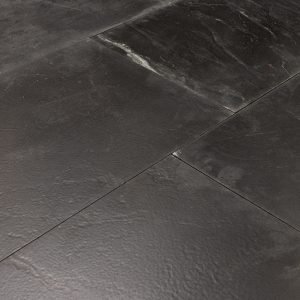
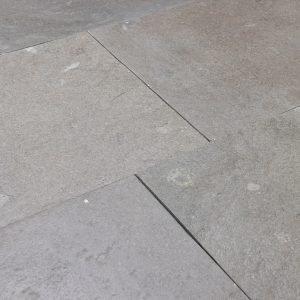
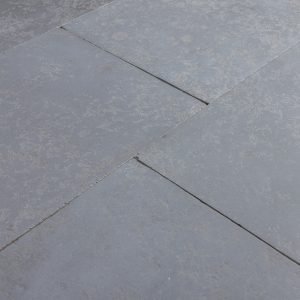
Limestone, quartzite and sandstone in 16″ x 24″ for floors, terraces and walls.
Asheville Sandstone Historical
Azteca Limestone Historical
Belgian Black Limestone Historical
Carbon Gold Quartzite Brushed
Mississippi Limestone Historical
Riviera Limestone Historical
Pavers & paving
Natural Stone & Porcelain Pavers
Paving is the largest single surface on most outdoor projects, which makes it the material that sets the tone for everything around it — and the one where format, thickness and setting method matter as much as colour.
Stone Era supplies large-format natural stone paving and porcelain pavers for patios, terraces, walkways, pool decks, courtyards and driveways on residential and commercial projects across Utah.
The range covers two families: natural stone in marble, travertine, limestone and bluestone, mostly 3 cm thick and offered in single sizes or mixed-size pattern kits; and 2 cm porcelain in large formats with a consistent, matte surface.
Freeze–thaw behaviour, slip resistance and vehicle suitability depend on the specific product and the installation, so confirm them against the product data before specifying. Settle the setting method early; it changes the base build-up under the whole area.
Know your square footage?
Send measurements, the intended use and access details and we will come back with suitable formats, availability and pricing.
Porcelain suits large sun-exposed decks and pedestal systems. Formats and thicknesses differ from the natural stone range — ask for the current data sheet.
Decide the traffic first. Sand-set and mortar-set are different builds, not different preferences. A driveway and a dining terrace can use the same stone and still need completely different bases.
Pick the pattern before the colour. A single large-format unit reads calm and contemporary; a mixed-size pattern reads more traditional and carries variation better. That decision changes the feel of a space more than the stone does.
Check the finish underfoot and in sun. Tumbled, brushed, flamed and sandblasted finishes behave differently when wet and reflect light differently in open sun. Put a sample on site, at the time of day the space gets used.
Plan drainage before you seal the surface. Where water goes once a large area is paved decides how long the installation lasts — more reliably than the material specification does.
Pavers for every part of a Utah project
Where the paving goes decides the format, thickness and setting method. Start with the area, then choose the stone or porcelain.
Patios and terraces
The largest surface on most projects. Large formats read calm and contemporary; mixed-size pattern kits feel more traditional and carry natural variation well.
Pool decks
Wet surfaces, bare feet and sun. Compare texture and surface heat, and choose the deck together with the matching pool coping.
Walkways and entries
Seen up close and tied to the house. A good place to repeat the tone of the stone on the elevation.
Driveways
Vehicle traffic needs a base, thickness and setting method designed for the load. Tell us early; not every paver suits vehicles.
Rooftop and pedestal decks
2 cm porcelain on adjustable pedestals keeps drainage below the surface over membranes and slabs.
Steps, treads and edges
Plan treads, bullnose edges and coping with the field pavers so the finished surface is priced and detailed as one package.
Natural stone, porcelain or concrete pavers?
Most Utah paving uses one of three families. Stone Era supplies natural stone and porcelain pavers; this comparison shows where each fits.
Consideration
Natural stone
Porcelain
Concrete pavers
Appearance
Natural variation in tone, veining and texture
Consistent color and pattern in many looks
Many shapes and colors; manufactured look
Common thickness
3 cm across most of our range
2 cm (¾″)
Commonly about 2⅜″ for patios; thicker for driveways
Over time
Weathers and develops patina
Color stays consistent
Surface color can soften as the face wears
Typical fit
Material character, matching coping and walls
Large sun-exposed decks, pedestal systems, contemporary designs
Large budget-driven areas and interlocking driveways
Wasatch Front. From Salt Lake City and Draper to Utah County and Ogden and Davis County, paving sees freeze–thaw cycles, snow removal and deicers. Base, drainage and the specific product matter more than the material category.
Park City and Heber. Snow stays longer and meltwater is a bigger factor in Park City and Heber. Detail drainage carefully and confirm the product’s suitability for the exposure.
Alpine and Highland. Family patios, pool decks and entries on Alpine and Highland homes often combine large-format pavers with matching coping and veneer.
St. George. In southern Utah, surface heat and glare usually matter more than frost. Lighter colors generally stay cooler; compare samples in full sun.
How paver pricing works
Pavers are usually quoted per square foot, with pattern kits sold by the kit or square foot and coping by the piece or linear foot. The total depends on the product, thickness, format, finish, quantity, waste allowance, treads and coping, and delivery.
Send square footage, the intended use and the delivery address and we will quote current pricing for the specific products. To compare quotes fairly, see How Much Does Natural Stone Cost in Utah?
Why buy pavers from Stone Era
Inventory. A large inventory of natural stone and porcelain pavers, sourced across multiple suppliers and quarries.
Matching pieces. Each natural stone paver shown has matching pool coping in the same stone.
Trade and homeowners. Trade pricing for builders, landscapers, pool contractors, masons and designers, and help with quantities for homeowners.
Samples and delivery. View materials by appointment; delivery across Utah is quoted by project.
Pavers — common questions
How thick are the pavers?
Most natural stone pavers shown here are 3 cm (1¼″) thick; Storm Bluestone is available in 1″ and 1½″. The porcelain pavers are 2 cm (¾″).
What sizes do they come in?
Natural stone runs from 6″ x 6″ to 24″ x 48″ depending on the stone, with pattern kits in mixed sizes. Porcelain comes in 24″ x 24″, 24″ x 48″ and 18″ x 36″. Each product page lists its exact sizes.
Is this paving safe in Utah winters?
Freeze–thaw performance depends on the specific stone as well as the base, drainage and installation. Ask for the product data for the paver you are considering, and see our guide to choosing exterior stone for Utah’s freeze–thaw conditions.
Where can I buy pavers in Utah?
Stone Era supplies natural stone and porcelain pavers to projects across Utah, including Salt Lake City, Draper, Utah County, Ogden and Davis County, Park City, Heber, Alpine, Highland and St. George. Materials can be viewed by appointment, and delivery is quoted by project.
Do you offer trade pricing on pavers?
Yes. Builders, landscapers, pool contractors, masons and designers can ask about trade pricing when they request a quote.
Can I use these pavers on a driveway?
Tell us up front if the area takes vehicles. A driveway needs a different base and setting method than a patio, and not every paver is suited to vehicle traffic, so we will confirm suitability for the specific product.
What is the difference between the natural stone and porcelain ranges?
Natural stone gives real variation and ages; porcelain gives consistency, tight tolerances and suits pedestal systems on large sun-exposed decks. They are often combined — porcelain across a deck with natural stone at the coping, for example.
Can paving be matched to the stone on the house?
Yes. Bring the veneer selection or a photo of the elevation and we can shortlist paving that shares its tone and texture family, so the ground plane and the building read together.
How much do pavers cost in Utah?
It depends on the product, thickness, format, quantity, special pieces and delivery. Send your square footage and intended use for current pricing, and see our guide to comparing stone quotes.
Can I see paver samples before ordering?
Yes. Request samples or schedule an appointment to see the pavers, and look at them outdoors next to your other exterior materials before deciding.
Ready to price a paved area?
Send square footage, the intended traffic, access details and whether the order needs to arrive in one drop or in phases.