



Quick answer: what is the difference between flagstone and squares & rectangles?
Flagstone commonly refers to relatively flat natural stone used for paving and landscape applications. It may be irregular or processed into dimensional formats. Squares and rectangles are natural stone pieces cut into repeatable rectangular dimensions, creating a more structured pattern and architectural appearance.
Choosing a patio format?
Send Stone Era your square footage, preferred thickness and inspiration photos for a format comparison.
When does irregular flagstone work best?
Irregular flagstone works well when the design calls for an organic, landscape-driven appearance. The varied edges and shapes can complement mountain, rustic and naturalistic projects. Installation labor and joint layout can vary because the mason or installer is composing the pattern in the field. It also suits sloped or curving layouts, where the varied shapes can follow the site instead of fighting it.
When do squares and rectangles work best?
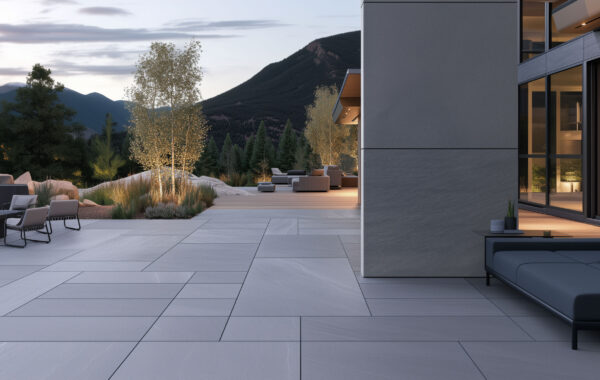
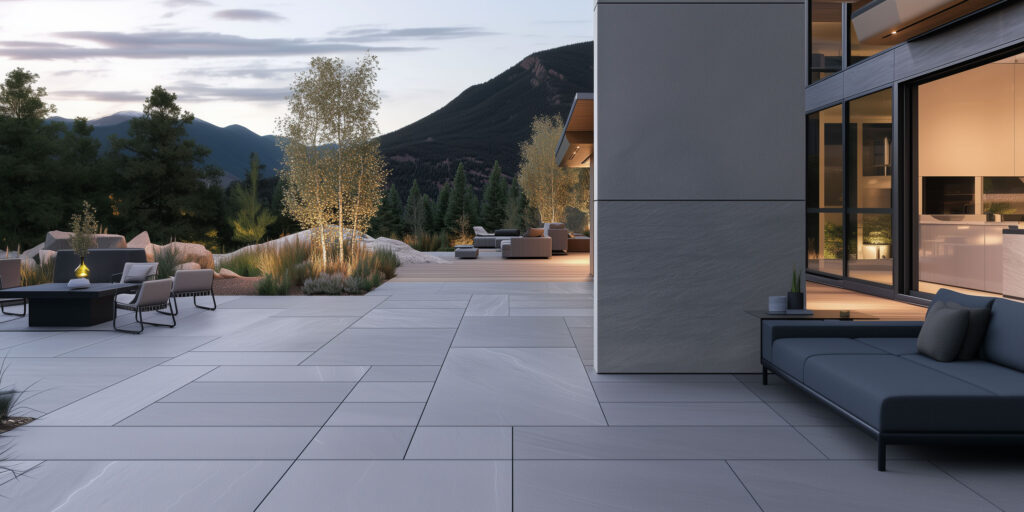
Squares and rectangles create a more ordered rhythm. They can work particularly well with contemporary, transitional and refined mountain architecture where clean geometry is important. Dimensional pieces also make it easier to establish repeating modules and deliberate joint lines. Browse pavers and natural stone options. They also pair naturally with modern furniture, linear fire features and large windows that share the same straight lines.
Thickness changes the economics
Do not compare flagstone only by price per ton. Coverage per ton changes with thickness, so a lower ton price can still produce a different installed material cost per square foot. When comparing suppliers, convert weight-based pricing into an estimated square-foot cost using the expected coverage for the exact material and thickness. Thicker material also weighs more per square foot, which affects freight and handling on the site.
A Stone Era pricing example
For example, Stone Era has compared 3-inch flagstone sold at $320 per ton with dimensional material priced at $14 per square foot. Using a working coverage assumption of about 48.5 square feet per ton for the 3-inch material, $14 per square foot is roughly $679 per ton equivalent. Coverage varies by product, so confirm the actual yield before purchasing.
| Example comparison | 3-inch flagstone | Dimensional material |
|---|---|---|
| Quoted price | $320 per ton | $14 per square foot |
| Working coverage assumption | About 48.5 square feet per ton (3-inch material) | |
| Converted for comparison | About $6.60 per square foot | About $679 per ton equivalent |
Illustrative example only. Coverage varies by product and thickness; request current pricing and confirm the actual yield for your selected material.
Can the two styles be combined?
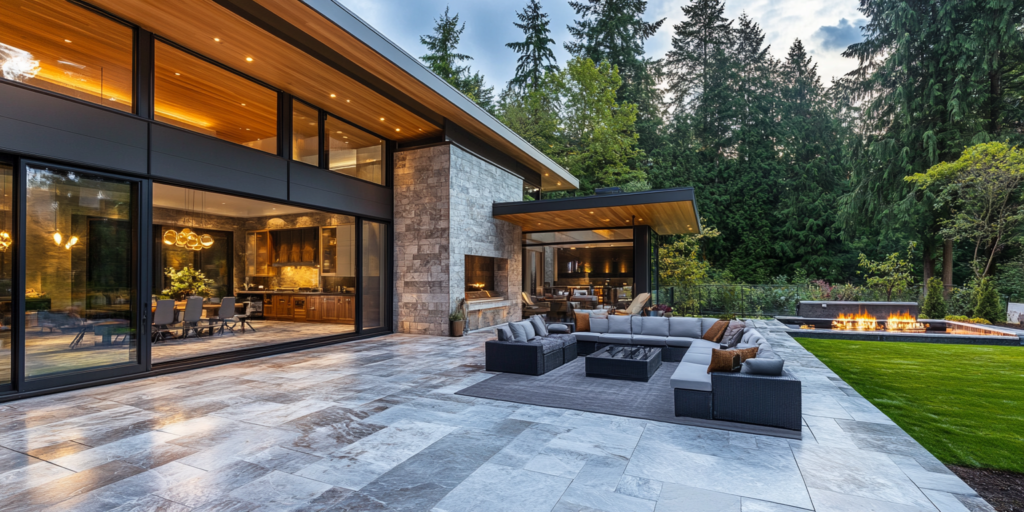
Yes. A project can use dimensional squares and rectangles in primary terraces or formal zones and more irregular flagstone in paths, transitions or landscape areas. Repeating color and stone type can keep the overall material palette cohesive. Stone Era supplies flagstone and dimensional stone to projects across its Utah service areas. A simple transition detail, such as a band of dimensional stone or a step, helps the two formats meet cleanly.
How installation method affects the choice
Flagstone and dimensional stone can be installed dry-laid over a compacted aggregate base with sand or fine gravel joints, or mortar-set over a concrete slab. The method affects which thickness makes sense, how wide the joints can be, how the surface drains and how much labor the installer needs. In areas with freeze–thaw exposure, the base, drainage and setting materials should be designed by the installer for local conditions. Ask the installer which method they recommend for the site before finalizing thickness, since the answer affects the quote.
Joints, patterns and finishing
Irregular flagstone typically has wider, varied joints that can be filled with gravel, polymeric sand, mortar or low plantings, which adds to its relaxed, landscape character. Squares and rectangles usually have tighter, consistent joints and can be laid in a repeating multi-size pattern, a running bond or a simple grid. The pattern changes the feel of the space as much as the stone color does, so decide on it early and ask for the size mix before ordering. Joint color matters too: a joint close to the stone color reads calmer, while a contrasting joint emphasizes the pattern.
Planning quantities
Irregular flagstone can require more trimming and fitting in the field, so ask your installer what waste allowance to include. For dimensional patterns, confirm the size mix and how the pattern is sold so the quantity arrives in the right proportions. In both cases, include treads, caps and edge pieces in the same quote so the finished surface is priced as a whole. Order a little of each size in the same shipment so the pattern can be laid out without waiting on missing pieces.
Browse materials from this guide
See available formats and finishes, then request current pricing.
- Graystone Squares and Rectangles
- Asheville Sandstone Historical
- Azteca Limestone Historical
- Mississippi Limestone Historical
- Riviera Limestone Historical
Frequently asked questions
Is flagstone slippery when wet?
Slip resistance depends on the specific stone and its surface finish. Natural cleft surfaces generally have texture, while honed or polished finishes can be smoother. Ask for product information and look at samples wet before choosing.
Which is easier to install?
Dimensional stone can be faster to lay in a repeating pattern but needs a flat, well-prepared base to keep joints consistent. Irregular flagstone takes more fitting in the field. Your installer can price both options for the same area.
Can squares and rectangles be used around a pool?
Yes, when the selected product and finish suit the pool environment. Coordinate the deck with the coping so edges, color and texture work together. See Choosing Pool Coping for St. George.
What thickness should I choose?
It depends on the installation method and the expected traffic. Dry-laid and driveway applications generally call for thicker material than mortar-set patios. Confirm the thickness with your installer before comparing prices.
Compare flagstone formats on a cost-per-square-foot basis
Send Stone Era your square footage, preferred thickness and inspiration photos. We can help compare flagstone formats on an estimated cost-per-square-foot basis.