



Quick answer: porcelain or natural stone pavers?
Choose based on the design, application and maintenance expectations rather than assuming one material is universally better. Natural stone provides authentic geological variation and one-of-a-kind texture. Porcelain provides controlled color, thickness and pattern with a manufactured surface. Both can create high-end outdoor spaces when the product and installation system are appropriate.
Planning a patio or pool deck?
Send Stone Era your plans and we can help compare natural stone and porcelain paver options.
| Consideration | Natural stone pavers | Porcelain pavers |
|---|---|---|
| Appearance | Authentic geological variation in tone, veining and texture | Controlled color and pattern with a manufactured surface |
| Consistency | Each piece carries natural differences | Repeatable sizing and controlled thickness |
| Typical design fit | Material depth and a connection to the surrounding landscape | Precision and controlled aesthetics, including large formats |
| What to verify | The specific stone’s suitability for the exterior application | Exterior-use rating, slip characteristics and installation method |
Why choose natural stone pavers?
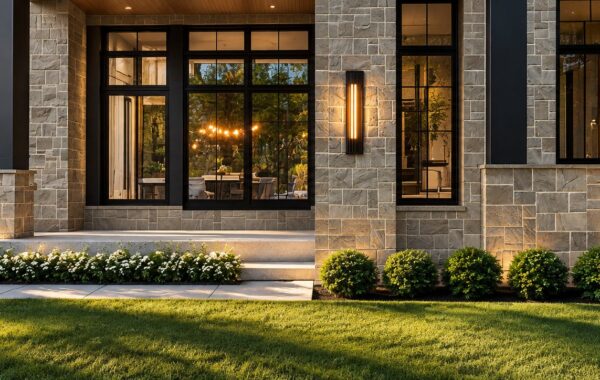
Natural stone is compelling when the project calls for material variation, depth and a connection to the surrounding landscape. Each piece carries natural differences in tone, veining and texture. Limestone, sandstone, granite and other stones can create very different architectural effects, so the specific stone matters more than the category name alone. Explore natural stone options. The same stone can also look very different honed, brushed, tumbled or with a natural cleft surface, so compare finishes as well as stone types.
Why choose porcelain pavers?
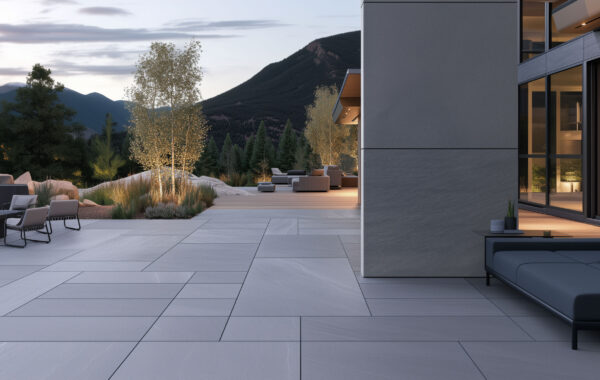
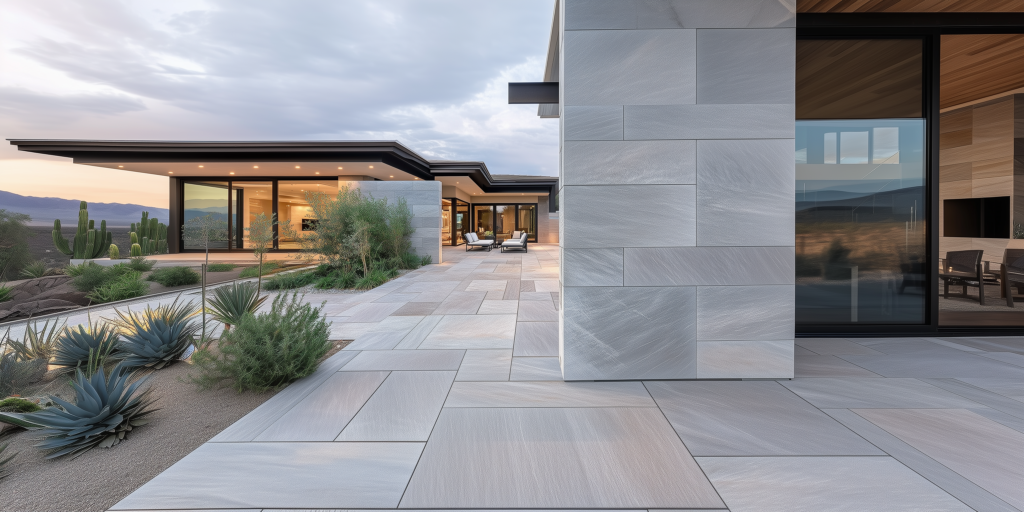
Porcelain is useful when designers want greater visual consistency, repeatable sizing and a broad range of manufactured looks. Some collections mimic limestone, concrete or other materials while maintaining a controlled palette. Product specifications should be checked for the intended exterior use, slip characteristics and installation method. See Stone Era’s natural stone and porcelain pavers. Large-format porcelain can also carry an interior floor out to a patio for a continuous indoor–outdoor look when a matching indoor product is available.
What about pool decks?
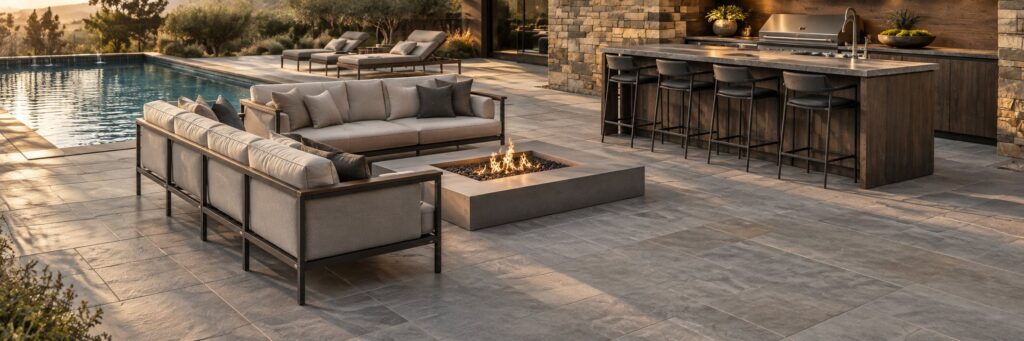
Pool surrounds add another set of questions: surface texture, edge treatment, water exposure, heat, maintenance and the relationship between the deck and pool coping. Do not select a paver from appearance alone. Review the exact product specifications and installation requirements for the pool environment. Coordinate the deck and coping early, since the edge profile, thickness and color of the coping should work with the paver you select.
What about Park City and Heber?
For Wasatch Back projects in Park City and Heber, freeze–thaw exposure and moisture management deserve special attention. The exact natural stone or porcelain product should be evaluated for the intended exterior application, and the installation assembly needs to be designed for local conditions. Read more in Choosing Exterior Stone for Utah’s Freeze–Thaw Conditions. Snow removal is worth discussing too, because shovels, deicers and plowing can affect some surfaces and joint materials.
Which looks more premium?
That is primarily a design question. Natural stone is valued for authentic variation and material character; premium porcelain is valued for precision and controlled aesthetics. A mountain residence may benefit from the irregularity of natural stone, while a highly contemporary project may favor large-format porcelain. Either can look sophisticated when the scale, jointing, edge details and surrounding materials are coordinated. Samples laid out together in the actual light of the site are usually the fastest way to decide.
Maintenance and sealing
Porcelain is defined by very low water absorption, so outdoor porcelain pavers generally do not need sealing and resist staining from most spills. Natural stone varies: some stones and finishes benefit from a sealer depending on porosity, exposure and how the area will be used. Follow the recommendations for the specific stone, and plan for periodic cleaning of joints and surfaces with either material. Ask about cleaning products as well, since some cleaners are not suitable for acid-sensitive stones such as limestone, marble and travertine.
Installation systems
Outdoor porcelain pavers are commonly around 2 cm (about 3/4 inch) thick and can be installed on pedestals, over a compacted aggregate base, or mortar-set over concrete, depending on the manufacturer’s requirements. Natural stone pavers are available in a wider range of thicknesses and are often dry-laid or mortar-set. Because the systems differ, ask your installer to price the complete assembly for each option rather than comparing material costs alone. Pedestal systems are often used for rooftop terraces and decks over membranes, where drainage below the surface is important.
Surface heat
Both materials can warm up in direct sun, and color matters as much as the material. Lighter tones generally stay cooler than dark ones. For pool decks and south-facing patios, compare actual samples in sunlight before deciding. Shade structures and plantings can also reduce surface temperatures in the most-used areas.
Browse materials from this guide
See available formats and finishes, then request current pricing.
- Pearl Stone Porcelain Pavers
- Slate Blue Porcelain Pavers
- Salt Flat Porcelain Pavers
- Charcoal Cement Porcelain Pavers
- Alabaster White Limestone Pavers
- Desert Sand Travertine Pavers
- Riviera Limestone Historical
- Mississippi Limestone Historical
Frequently asked questions
Do porcelain pavers hold up to freeze–thaw?
Many outdoor porcelain products are rated for frost resistance, but ratings vary by product. Check the manufacturer’s specification for the exact paver and confirm the installation method is suitable for the climate.
Are porcelain pavers slippery?
Outdoor porcelain pavers usually have a textured finish for exterior use. Review the product’s slip-resistance information and look at a sample wet, especially around pools.
Can I combine porcelain and natural stone?
Yes. A common approach is porcelain on large terraces with natural stone for walls, steps, caps or pool coping. Keep the colors related so the palette feels intentional.
Which costs less?
It depends on the specific products, thickness and installation system. Request quotes for both options on the same area so you can compare the complete material package.
Comparing paver options?
Send Stone Era your patio, pool or landscape plans. We can help compare natural stone and porcelain options and quote the material package.